


Why does the dachshund have such short legs?
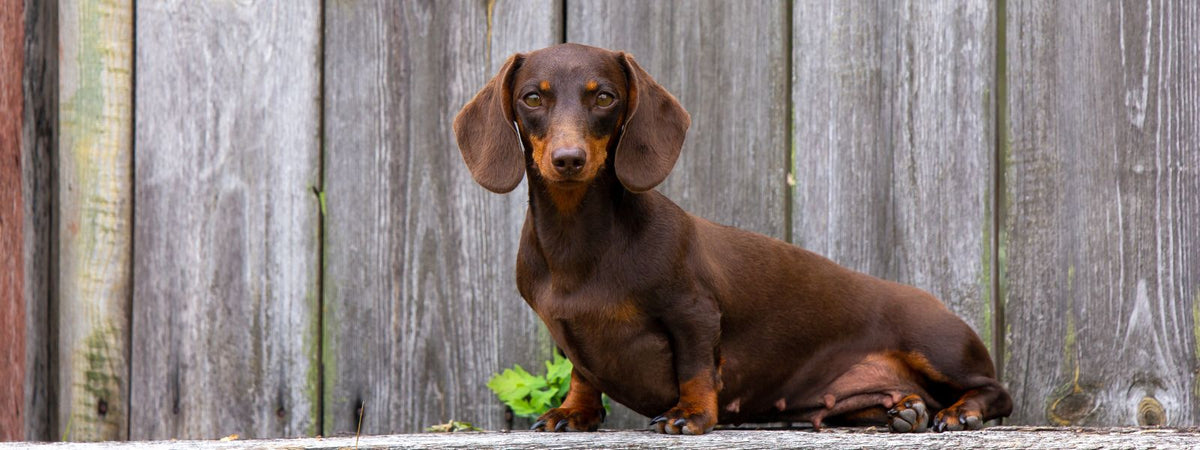
The sound of its little claws on the hardwood floor in the morning, its happy little trot when it comes looking for a pet... Have you ever asked yourself the question when faced with this unique physique: why does the dachshund have such short legs on such a long body? The answer lies in a single gene that tells the whole story of this small-sized dog.
Why does the dachshund have such short legs: one gene, centuries of history
The FGF4 gene: what stops limb growth
Behind its short legs hides a genetic peculiarity: the chondrodystrophy of the dachshund.
In 2009, the team led by researcher Heidi Parker published a study in the journal Science. Scientists identified the culprit: a specific gene named FGF4. It acts as a signal that tells cartilage to set earlier than expected.
This same mechanism also weakens the spinal discs. The dachshund's short legs and the fragility of its back share the same genetic origin.

Why did breeders seek this silhouette?
The origins of the dachshund go back to the Middle Ages. In Germany, short-legged hounds were gradually selected for underground hunting. Courageous and perseverant, they had to be able to squeeze into tunnels to dislodge badgers or foxes in particular.
These dogs evolved over the centuries to give rise to the dachshund we know today. However, the breed would not be officially structured until much later, with the writing of its first standard in 1879.
Its short, sturdy legs allowed it to dig and crawl through narrow tunnels. Its wide, deep chest gave it the breath and stamina needed to face a combative prey.
A profile adapted to every terrain
The FCI recognizes three official varieties of dachshund (within its group 4, for underground and above-ground hunting dogs), each calibrated for a distinct terrain:
The Kaninchen (Rabbit Dachshund) generally weighs up to 3.5 kg. Historically, it was intended for chasing wild rabbits in their tunnels and very narrow burrows.
The Miniature dachshund generally falls between 3.5 and 7 kg. It was particularly used in small burrows and for ferret hunting.
Finally, the Standard dachshund generally weighs between 7 and 15 kg. Its morphology allowed it to explore the deep tunnels of badgers and foxes.
Note: the merle coat defines a shade of fur. This peculiarity has developed over the centuries through the origins of the dachshund and the work of breeders.
A profile closer to the ground than ever
In a century of selective breeding, the sausage dog has moved even closer to the ground. Shorter-legged than in the past, today's Doxie places more stress on its back.

What is the impact of the dachshund's short legs on its health?
Pes varus: when its little legs round out
Observe your companion when it stands straight in front of you. Do you sometimes notice a slight deformation of the front leg? This phenomenon is called pes varus and comes directly from chondrodystrophy: the two bones of the forearm do not grow at the same pace. When one stops growing too early, the other continues to grow while curving inward.
When should you ask for a veterinarian's advice?
A slight curvature is part of the breed's classic morphology. However, if it becomes very marked, and if your beloved pup hesitates to put weight on its paw or shows a stiff gait, a veterinary consultation is necessary to avoid the onset of osteoarthritis.
What this means for its joints
When it leaps off the sofa or rushes down the stairs at full speed, its little legs do not have the height necessary to cushion the landing. The shockwave travels directly along its entire back. It is this repetition of small impacts that eventually weakens its spine.
The dachshund is 10 to 12 times more likely to develop a herniated disc than other breeds. To preserve your companion's spine and avoid back pain, a few simple habits adopted daily make all the difference.
The 4 essential steps to preserve the short legs and long back of your dachshund
Is your dachshund in back pain because of its little legs? Protecting its health requires little, but it does require consistency:
-
No more repeated jumping: install an access ramp at the foot of the bed, the sofa, and even for getting into the car. It spares them from brutal landings and protects their spine.
-
Manage the stairs: steps put a huge strain on its limbs and back. Put up a gate at the bottom of the stairs to stop stunts and avoid repeated shocks.
-
A harness adapted to its morphology: prefer a suitable harness, which clears its shoulders well without pulling on its neck.
-
Watch its ideal weight: every extra kilo exerts additional pressure on its joints and strains its spine further. Seen from above, its silhouette should show a slight inward curve just after the ribs. To the touch, the ribs should be easily felt without being too prominent.
The answer to the question "why does the dachshund have such short legs" lies in its history, written in every centimeter of its DNA. Learning to protect it every day means offering it the freedom to live its intrepid dog life to the fullest, with complete safety for its spine.
To combine your dachshund's well-being with a touch of elegance, discover our collections, designed for its unique morphology, in the shop.

FAQ - Why does the dachshund have such short legs
What is the genetic disease of the dachshund?
The main mutation of the breed is called chondrodystrophy (linked to the FGF4 gene). It stops the growth of the long bones of the limbs and predisposes the dachshund to fragile intervertebral discs.
What are the common health problems in the sausage dog?
Herniated disc (IVDD) is the leading cause of veterinary visits, followed by angular limb deformities (pes varus) and weight gain, which is very harmful to the back.
Do the dachshund's short legs prevent it from going on long walks?
Not at all. The doxie is an endurance dog. You just need to avoid overly rough terrain. For long hikes, having a suitable transport bag allows you to spare its body.
How do I know if my short-legged dog is suffering from its joints?
A hesitation before jumping, a hunched back, a stiff gait, or a whine when you pick it up should alert you. Knowing how to carry a dachshund is essential, but if the pain persists, consult a veterinarian without delay.
Virginia, from the Teckelshop team - 💚


Leave a comment
All comments are moderated before being published.
This site is protected by hCaptcha and the hCaptcha Privacy Policy and Terms of Service apply.