

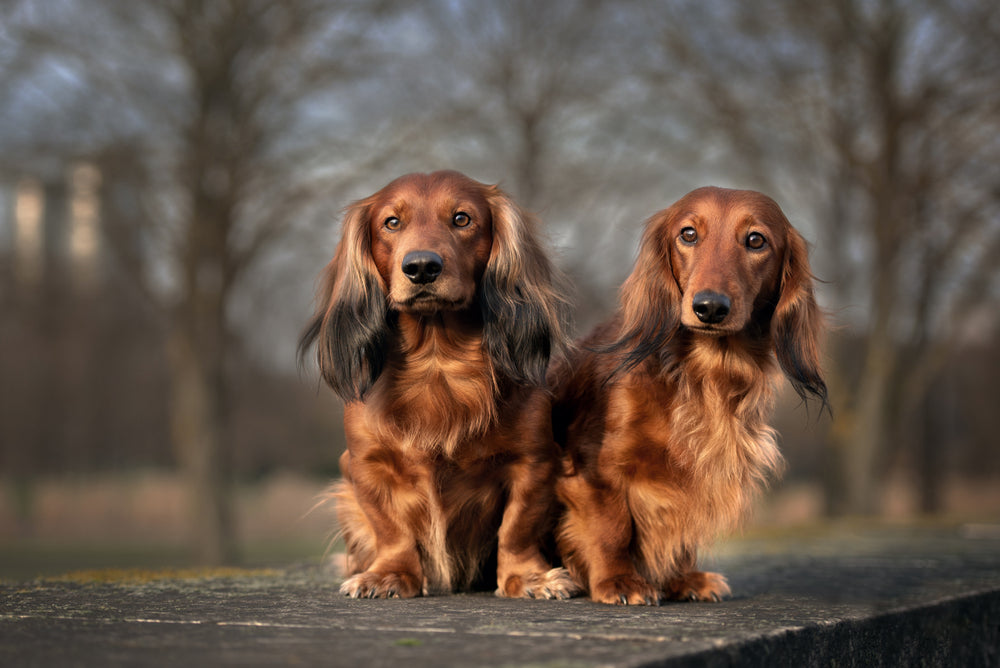
Do Dachshunds Shed?
You can expect shedding with any dog, but what about our friend the Dachshund? How do they shed? How often...?
First of all, it is a healthy and normal part of their life as a dog, and if you have a long-haired dachshund, you can read our article on grooming them.
However, hair loss is not that common and usually indicates an underlying health problem...
So how can you tell the difference in their health status when a dachshund loses its hair?
Regular shedding can be characterized by uniform hair loss all over the dachshund's body, with hair growing back as quickly as it falls out.
In addition, your dog's coat should be shiny and healthy.
Hair loss can be detected when large bald patches are visible.
Indeed, their coat will be thin and they may shed large clumps of hair. Their skin will likely be scaly, red, or even infected.
When they lose a large volume of hair that does not grow back, this hair loss should not be ignored. Furthermore, when a dog's skin is exposed, it can become more sensitive to sunburn and extreme cold.
In fact, their coat isn't just there for petting (even though we love that); it protects their skin and keeps them insulated.
Moreover, hair loss often goes hand in hand with itchy skin, which leads to lesions or infections.
Fortunately, many causes of hair loss are temporary and easy to treat.
BUT it is best not to ignore the fact that it is happening and to talk to your veterinarian about it.
Even if it is easy to treat with special creams, hair loss can indicate a more serious health condition, which, if left untreated, can be harmful.
Causes of Dachshund Hair Loss

Read: Which Dachshund to Choose
Alopecia
The onset of this condition begins between six months and three years of age.
The immune system begins to attack healthy cells, such as hair follicles.
Alopecia is the general term for hair loss, and it occurs due to an overactive immune system.
There are two different types of alopecia that are particularly common in dachshunds: color dilution and pinnal.
Color dilution alopecia is more common in fawn-colored dogs.
This type of alopecia is the result of the removal of solid colors, like brown or black, to dilute the coat.
Other signs include dry, scaly skin and infected hair follicles.
Although the infection must be treated, the disease itself cannot be prevented.
Dogs with this condition are encouraged not to breed, in order to prevent passing on the disease.
Pinnal alopecia is a normal baldness, and you will be able to spot it by the location of the hair loss, behind the ears.
It can begin between six months and a year old, and the pattern will be the same on both ears. By the age of eight or nine, the ears may be hairless.
Acanthosis Nigricans:
A rare cause of hair loss in dachshunds is a condition known as Acanthosis Nigricans.
This condition is common in dachshunds and usually manifests before the age of one.
It can even affect us humans.
It involves hyperpigmentation of the skin, which appears as irregular patches.
These patches are darker than the dog's skin color and are usually found on the chest down to the groin.
The affected areas are generally not inflamed, but can become so if they are irritated. This can then lead to skin lesions that give off an unpleasant odor.
In the best-case scenario, this condition may be harmless. But you may still want to have your puppy examined by their vet.
The vet can perform skin tests to rule out other diseases.

Hypothyroidism:
This term refers to an underactive thyroid, as opposed to hyperthyroidism, which is an overactive thyroid.
The thyroid gland is located in the neck and regulates hormone production.
An underactive thyroid is slow to produce hormones, including those necessary for a healthy metabolism.
It makes sense that one of the effects of hypothyroidism is weight gain. Along with other aesthetic problems, such as scaly or infected skin and a dull, patchy coat.
Since this is a serious condition, your pet will need to take medication for their entire life.
Additionally, you will need to put them on a special diet.
The vet will be able to diagnose this disease by performing blood and urine tests.
If you notice any of the symptoms above, along with lethargy or general depression, see a vet immediately.
Cushing's Disease:
Cushing's disease represents an overproduction of cortisol, the hormone we produce when we are stressed.
It is normal to produce it when faced with a stressful situation, but it can be dangerous if it accumulates in the blood.
Not to mention skin infections, which can also lead to hair loss. Blood and urine tests, along with a physical exam, will be used to diagnose the disease.
If the results are positive, the vet will need to determine the cause to recommend a treatment.
Allergies:
In this case, the dachshund's hair loss is caused by scratching or pulling out hair.
A dog's skin becomes irritated when they have an allergic reaction, and they will try to soothe it.
There are several sources of allergens that could affect your dog.
Diet:
The food you feed your dachshund every day is essential for their good health.
It should be remembered that some dogs are allergic to certain types of food, just like humans, and this can lead to hair loss in the dachshund.
Indeed, it could be something you give them regularly, or something they have eaten before.
The only way to determine a food allergy in a dachshund is to consult a veterinarian who can run tests.
If you notice that your dog has diarrhea or vomiting after eating certain foods, consult a specialist.
Other symptoms include excessive licking and ear infections.
Medicine and Treatments for Dachshund Hair Loss

Unfortunately, the very act of treating one issue can cause another.
Many medications list rashes or skin problems as side effects.
This can lead to scratching and eventually hair loss.
If your dog is taking medication, check the packaging or ask the vet if this could be the cause.
If it turns out that the medication is causing hair loss, depending on the duration of the treatment, the vet will be able to advise you on the best course of action.
If it is a short-term treatment, they will likely prescribe a cream or something to chew.
Insect bites:
Any insect bite can cause an allergic reaction, and therefore scratching and biting in dogs.
But some are more likely to cause hair loss than others.
It is believed that fleas are the main cause of hair loss in dogs. These small parasites bite your dog to feed on their blood, which causes skin irritation.
A mite infestation, also known as mange, causes the same phenomenon.
You will know if your dog is infested with one of these parasites because they will be scratching constantly.
When you examine their skin, you will notice that it is often inflamed and infected.
But fortunately, these conditions are easy to diagnose and treat.
Trauma:
If your furry friend has experienced a distressing event, they may lose their fur as a result.
(This can be particularly common in rescue dogs).
But it can also be caused by a dog attack, an accident, treatment, or surgery.
Since our dogs cannot talk to us and let us know they are going through a difficult time, their emotions manifest in their physical health.
Treatment of Dog Hair Loss

The best course of action depends on the cause of the hair loss!
In cases where it involves treatment, the vet will likely prescribe creams and ointments.
They will try to promote hair regrowth for your dachshund, but this is not always possible. They will therefore focus on the health of your dachshund's exposed skin.
Your puppy may also need to take antibiotics if their skin becomes infected.
If the hair loss is a symptom of a more serious condition, the vet will recommend the best treatment to address the root cause.
Once they have finished their treatment or it begins to take effect, you should notice that their coat starts returning to normal.
During the entire treatment time, you might want to soothe their little aches, and that is perfectly normal.
Also, you can administer vet-approved creams. These creams soothe the area and discourage scratching.
You can also give them a dog chew bone while waiting for treatment, or even a toy to help them relax.
You can also invest in a dog coat made from non-irritating materials. This is a good idea if the hair loss is permanent, as dachshunds tend to get cold.

From a nutritional standpoint, it is important to provide your companion with a diet rich in vitamins and minerals. Vitamins A and E, iron, and protein all promote hair growth.
Ensure that the food source you have chosen contains all essential nutrients.
Your vet may even be able to recommend supplements based on your dog's diet.
Foods that are particularly important contain fatty acids, so be sure to always check the label or consult a specialist!
In Summary
A dachshund is a dog that sheds moderately. A very common cause of hair loss in them (like all dogs) is due to parasites such as mites, lice, or fleas.
In particular, if your dog is losing hair around their neck and tail, there is a strong chance it is due to fleas.
Over time, this can lead to hair loss, as certain areas of the skin become weakened and their coat is pulled out.
Take good care of him (or her), remember to brush them according to their coat type (smooth-haired, long-haired, wire-haired), use a trimmer to strip your wire-haired dachshund, and they will surely pay you back every day with lots of love 😊
The Teckelshop team - 💚 Last modified 07/15/26

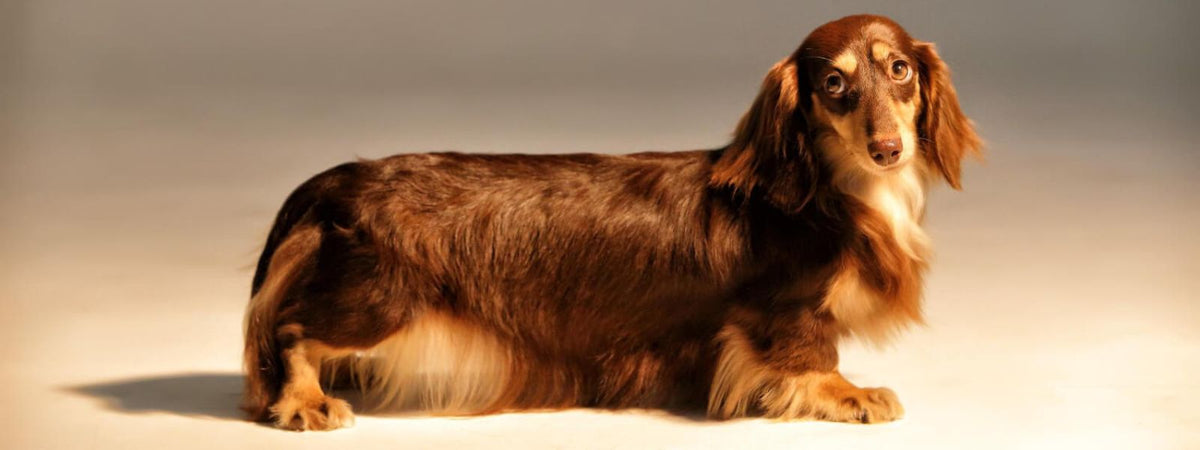

Leave a comment
All comments are moderated before being published.
This site is protected by hCaptcha and the hCaptcha Privacy Policy and Terms of Service apply.