

Is Dog Chewing Important?
As the owner of a pooch breed or the famous sausage dog, it is important to understand your dog's chewing behavior 😊
This will help you minimize your dog's destructive chewing and reduce your frustration.
Below are some points explaining why pet dogs chew!
Why All Dogs Love to Chew ?

There is no doubt that dogs and puppies love to chew - they are programmed for it! 😃
Although the chewing instinct is completely natural, our furry friends can easily develop good and bad chewing habits. Fortunately, you can do a lot to encourage good behavior.
Good chewing behavior occurs when your puppy is calm, is being attended to, and has safe chew toys or treats available when they need them.
In contrast, bad chewing usually happens when:
- your puppy is scared.
- your puppy is too hungry.
- teething is causing them pain.
Here is what you need to know about your pooch’s chewing and how to control it 😉
Why Do Dogs Like to Nibble ?
There are three main reasons why dogs like to nibble:
1. Exploration:
Chewing is a way for dogs to explore a new environment.
Puppies and newly adopted dogs are particularly prone to nibbling on objects they perhaps shouldn't, at least initially. Familiarizing themselves with a new environment using their mouth is as normal as eating a snack or touching something to smell it.
2. Self-care:
For puppies, chewing is an instinctive way to relieve the pain of new teeth breaking through their gums. For older dogs, it is a way to keep their jaws strong and their teeth healthy.
3. Entertainment:
Most of the time, dogs chew to combat boredom and relieve mild anxiety or frustration, which can be a healthy form of entertainment and distraction as long as the chewing is limited to appropriate objects - much like us humans squeezing a stress ball while sitting in traffic!
Furthermore, chewing can simply be fun and delicious, especially when it comes to a treat to lick and chew!
What Causes Bad or Destructive Chewing?

Bad chewing in your dog can be defined as the destruction of objects in your home, such as pillows, clothes, table legs, books... and many more.
This type of destructive chewing behavior is usually linked to other problems your dog may be experiencing, such as:
Separation anxiety
Does your puppy only chew objects to the point of destruction when left alone?
If so, your dog is likely suffering from some form of separation anxiety.
This anxiety manifests as nibbling on anything they can get their teeth on to vent the stress of being alone.
To solve this problem, start by leaving your puppy alone for shorter periods in a more confined area with their toy (special anti-destructive) or their favorite treat. This will help them associate your absence with a happy place filled with their most precious belongings 😊
Sometimes, having too much space to roam can be overwhelming for a small puppy or a dog in a new home. By providing a safe, warm spot with appropriate chew toys, they will learn that they are safe during your absence.
Hunger
Puppies on low-calorie diets may chew objects in an attempt to soothe their hunger. Have you ever felt a sudden sense of frustration when you haven't eaten enough or are trying to stick to your summer diet...?
The word "hunger" comes to mind and this can also happen to dogs.
This doesn't mean a low-calorie diet is bad for them. You and your puppy’s vet are best placed to know that. Simply be attentive to any changes in chewing behavior when your puppy is on a diet. They might start finding that your cushion looks like a giant hot dog 😅 - perhaps hunger is speaking.
Puppy teething
The first six months with your puppy can be very revealing, as you realize all the things lying around your apartment that look like fantastic teething toys.
Try giving your puppy ice cubes, frozen damp washcloths, or frozen chew treats to help numb their gums during this painful period. Your home will thank you!
Encouraging Normal Chewing Behavior

Chewing behavior is fun for dogs and can improve brain stimulation, promote strong jaws and healthy teeth; the trick is to ensure your dog is chewing appropriate objects.
Here are some tips to encourage healthy chewing behavior:
Puppy-proof your home
Remove all chewable items from your dog that you don't want destroyed. It might add five extra minutes to your morning routine to make sure nothing is left on the floor or the couch, but it is worth it.
This strategy allows your dog to succeed and saves you from feeling double the frustration by blaming yourself for leaving items in the chewing zone.
Healthy chewing options for your puppy
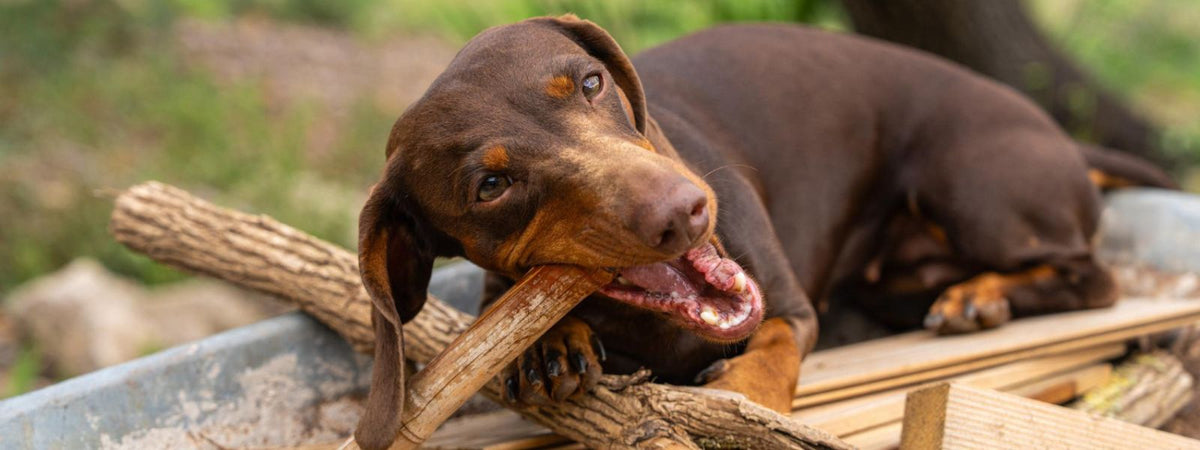
We recommend offering edible chew treats or bones like "bear sticks" or deer antlers (see photo below).
Not only are they long-lasting, but they are an excellent source of protein without the extra additives and chemicals found in many other bones.
Rotate your dog's chew toys and treats, ideally every other day, so they don't get bored and start developing destructive behavior with the chew toy itself.

Set your dog up for chewing success
It is important to correct destructive chewing behaviors as soon as you witness them.
If your furball starts nibbling on an object they shouldn't, take it away but offer something else in exchange.
The dog will then know they are not allowed to chew the object you took from them, but that they can do so with the object you gave them.
✅ Praise them when they start nibbling on appropriate objects so they associate the urge to nibble with the correct items.
10 Reasons Why Dogs Chew
1. Testing:
Dogs nibble on anything and everything to see what happens. For example, a shoe for your dog is an exciting thing to test and discover.
2. Instinct:
It would be great if your dog only chewed what you gave them, but dogs are hard-wired to chew. Their instinct tells them that chewing is necessary for protection, guarding their family, and also for hunting.
3. Teething:
Baby teeth start to emerge when puppies reach 2 months of age and are replaced by adult teeth around 4-6 months. During both periods, dogs chew constantly to relieve the sensitivity in their teeth and gums.
4. Cleanliness:
Chewing helps dogs keep their teeth and gums clean and strong.
5. Loneliness or boredom:
When a dog feels lonely or bored, they start nibbling on everything around them to keep busy.
6. Exercise:
Chewing is good exercise for a dog's jaw muscles. This is especially important for a puppy because they need to strengthen their jaws to be able to chew harder objects as they reach adulthood.
7. Hunger:
Dogs can start chewing objects when they are hungry. This is a moment when they experiment by chewing your belongings, so stay alert.
8. Relief:
Chewing relieves a dog of tension or anxiety. It keeps their mind occupied and distracts them from anything that might be bothering them.
9. Treating your items as toys:
When you start playing with your dog using one of your items as a toy, don't be surprised to see your dog chewing that item later! If you make them feel they can play with any object, they will take it seriously.
10. Disorders:
Some dogs may suffer from disorders that cause them to chew. Your vet can help and provide information.
In Summary
The best way to stop bad chewing behavior is to ensure the rest of your dog's life is well-balanced 😊
Intense physical activity and a healthy diet can mitigate some of the causes of destructive chewing and encourage positive chewing behavior.
Give your pet something to chew on (under supervision) that is natural, safe, and long-lasting, satisfying their need and desire to chew!
👉 Get 10% OFF in the ÉVIDENT store with the code "TECKELSHOP10" 🐶
The Teckelshop team - 💚 last modified on 15/07/26


Leave a comment
All comments are moderated before being published.
This site is protected by hCaptcha and the hCaptcha Privacy Policy and Terms of Service apply.